Should Blockchain Be Applied in Vietnamese Education?
03/11/2022
When it comes to blockchain, most people usually think of Bitcoin, but in fact this technology has made great strides and created a lot of positive changes in other areas besides digital assets. Notably, blockchain is initially creating a revolution in the education industry in some countries around the world, especially at the university level. Should blockchain be applied in universities and colleges in Vietnam?
Blockchain is a chain of blocks of information linked together by cryptographic algorithms. Information once written to the block cannot be modified. Blockchain stores a copy of information at every node (computer in the system), so it can be seen as an effective, transparent, and convenient storage tool for searching and retrieving information. As for higher education and training, blockchain also offers broad application potential.
Blockchain is believed to be an effective tool for higher education.
How is blockchain applied in tertiary education?
Manage student documents and records
The traditional record-keeping method still has disadvantages as the school online management system is likely to be hacked or overloaded. In contrast, thanks to its decentralized nature and cryptographic algorithms, blockchain is virtually impenetrable, which ensures the security of documents and records stored on the platform. In addition, personal data of students (grades, collective activities, movements, awards, etc.) will be kept clearly and permanently, allowing data retrieval at any time.
Blockchain facilitates the process of managing student records.
Enforce the school regulations
Blockchain can also be used to automatically enforce the school regulations with the smart contract feature. Smart contracts are programmed to automatically perform tasks when the established conditions are satisfied, helping to handle cases of non-compliance. For example, if a student violates some of the rules, the system will record and propose appropriate disciplinary measures.
The smart contract enables automatic enforcement of regulations.
Bridge the gap to recruiters
With immutable characteristics of blockchain, the data of the entire learning process, research, and extracurricular activities of students are recorded and stored on the school online platform. Employers and businesses can access student profiles, identify their capabilities and select suitable candidates. Students can also actively send their online resumes to recruiters, making it easy for them to review without any intermediaries.
Blockchain builds a flexible bridge between students and employers.
Access multiple sources of information at a lower cost
Blockchain can give all members of an educational institution the right to access and share resources such as books, podcasts, and movies via the public domain. While other storage systems are limited in capacity and expensive to maintain, blockchain allows these resources to be stored indefinitely and boundlessly, always available to serve teachers and students without any fees.
Although blockchain has proven its potential in education and training, there are not many institutions in Vietnam implementing pilot projects to integrate blockchain into this field. Every year, the State spends about 20% of the total budget on education and training activities (according to Resolution No. 25/2016/QH14 dated November 9, 2016 of the National Assembly), showing that education and human development are our country's top concern. Therefore, Vietnam fully has the resources and opportunities to apply high technologies to serve, innovate, and improve the quality of education.
In the Mekong Delta, FUNDGO Startup and Innovation Fund not only invests in key areas such as science, technology, finance, etc. but also focuses on education. The Fund has actively cooperated with leading colleges and universities in the region such as Can Tho University, Can Tho University of Engineering and Technology, FPT University, FPT Polytechnic College, etc. to organize many blockchain workshops and seminars to disseminate knowledge about this new technology, step-by-step bringing blockchain into education. With solid resources and expertise in blockchain, FUNDGO is ready to support organizations and educational institutions in Vietnam in applying blockchain to training programs, contributing to the improvement of teaching and learning quality.
FUNDGO focuses on education - training and strengthens cooperation with universities and colleges in the region.
Obviously, the application of blockchain is beneficial to educational management. Therefore, if it is applied properly and exploited effectively, Vietnamese education will reach a higher level, and other barriers in the traditional management process will also be removed.
In the early stages of an undemarcated market, the advantage usually lies with the fastest mover. But once the rules of the game begin to be established, market logic changes completely. The advantage no longer belongs to the fastest runner, but to those who can build the infrastructure and control the risks.
Not only through speculation, the multi-million dollar assets of Vietnamese entrepreneurs in the digital asset sector are formed from technology products. Vietnam is currently among the countries with a high level of participation in the digital economy and digital assets in Asia. It is estimated that approximately […]
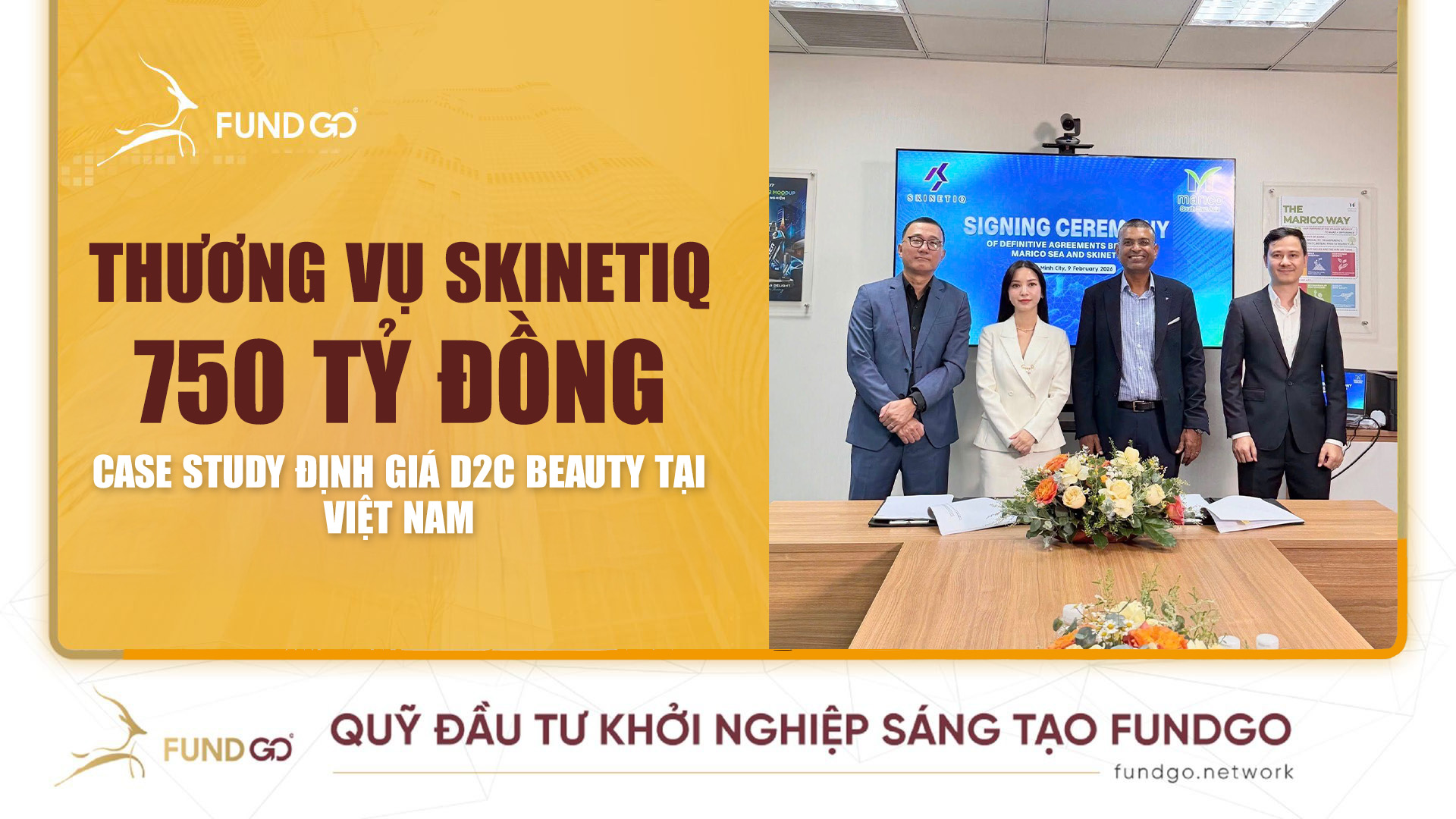
The Vietnamese M&A market has just seen another deal significant enough to prompt investors and D2C founders to pause and analyze: Indian conglomerate Marico Limited spent approximately VND 750 billion to acquire 75% shares of Skinetiq, a company co-founded by Hannah Nguyen. If we deduce this, then […]
The collapse of JWR shows that not all platforms claiming to be "gold investments" are based on the same value foundation. When comparing JWR and HanaGold within the same frame of reference, the differences become clear, stemming from the nature of the product, the risk management mechanism, and so on.
The recent collapse of the JWR gold investment app in China has become one of the biggest shockwaves for the region's financial markets. With estimated losses exceeding 10 billion yuan, equivalent to approximately $1.4 billion, […]
In recent years, Real World Assets (RWA) has been seen as a new approach to applying technology to asset management, cash flow transparency, and optimizing capital connectivity. Globally, many independent studies have noted the growth rate […]
In the digital transformation of the financial and business markets, many organizations worldwide are seeking models that make physical assets transparent, easy to track, and convenient for governance and capital management. Among them, RWA (Real World Assets) stands out...
In the period 2024–2035, digitizing data related to assets, benefits and cash flows in a verifiable, automated and risk-controlled way is considered the direction many organizations in the world are researching. However, not all models “bring data […]
In the global capital market structure, the typical recurring cash flow asset group, bonds, is often considered the stable foundation of many portfolios. In Vietnam, after a period of rapid growth and then strong adjustment, the need for “transparency – standardization – number […]
Creative innovation is entering an era where the core value lies not only in the original work, but also in the exploitation rights that can be extended over time and space. From music, movies, fictional characters to images, designs, content […]