Blockchain is gradually becoming a trending technology that captures enormous attention from organizations and businesses around the world. In Vietnam, blockchain is no longer an unfamiliar term as it has received widespread acceptance. The State is also promoting research and step-by-step promulgating blockchain-related legal framework, guidelines and policies.
On September 10, 2022, Mr. Dao Tien Phong – Managing Lawyer of Investpush Legal, Senior Advisor of FUNDGO Startup and Innovation Fund, held the workshop “Lawyers and Blockchain Technology” in Ho Chi Minh City. At the workshop, Mr. Phong pointed out the basic concepts of blockchain as well as the regulatory framework regarding this technology.
Mr. Dao Tien Phong shares about blockchain technology in the workshop “Lawyers and Blockchain Technology”.
Mr. Phong showed that blockchain is a technology that structures all data into blocks and links them together, forming a chain of data. Once a new transaction occurs, old information will not disappear. Instead, new information is compiled into a newly formed block that will then also be added to the chain in chronological order. Any data that has been added to a block cannot be altered or deleted. Blockchain can be viewed as a ledger that records all transactions of a particular network. This technology is being applied in 65 fields including banking, securities and funds, insurance, state management, infrastructure, etc. With outstanding applications, blockchain is forecast to continue its thriving development in the future. Specifically, the blockchain market size including cryptocurrencies is expected to proliferate from $4.93 billion in 2021 to $227.99 billion in 2028 at an annual growth rate of 72.9%, showing the rapid development of this industry.
Blockchain technology is being applied in various fields.
At the workshop, Mr. Phong said that in Vietnam, the blockchain market needs timely advice and guidance as well as a clear legal framework to develop this technology. From 2017 to now, there have been more than 10 blockchain-related legal documents such as: Decision No. 942/QD-TTg dated June 15, 2021 of the Prime Minister approving the e-Government development strategy towards digital government in the period of 2021 - 2025, with orientation to 2030, which includes: Prioritizing researching, developing and mastering core technologies, and promoting the research movement of core technologies in which Vietnam has advantages and capacity of making strong breakthroughs such as QR code, AI, blockchain; research, build and pilot the use of cryptocurrency based on blockchain technology; Decision No. 664/QD-BTC dated April 24, 2020 of the Ministry of Finance deciding to establish a team to research digital assets and cryptocurrency; Decision No. 411/QD-TTg of the Prime Minister approving the national strategy to develop the digital economy and digital society by 2025, with a vision to 2030, including researching and proposing mechanisms and policies on cryptocurrency based on blockchain; Decision No. 343/QD-BNV dated April 27, 2022 of the Ministry of Home Affairs licensing the establishment of Vietnam Blockchain Association. The above policies show that the State has been interested in blockchain and the development potential of this technology in the future.
Delegates discuss blockchain technology.
With the goal of becoming the top startup and innovation fund in Vietnam and Asia in investing in the blockchain sector, FUNDGO will expedite the implementation of numerous initiatives to encourage the development of the Vietnamese blockchain market. The Fund will seek and support promising projects, assisting businesses access this ground-breaking technology. With an advisory board of leading experts in the field of blockchain and digital assets, FUNDGO will focus on consulting for businesses on blockchain applications in production and business to achieve positive outcomes. The Fund will also collaborate with other organizations to train human resources in both theory and practice, to increase the quantity and quality of resources in this field.
In the early stages of an undemarcated market, the advantage usually lies with the fastest mover. But once the rules of the game begin to be established, market logic changes completely. The advantage no longer belongs to the fastest runner, but to those who can build the infrastructure and control the risks.
Not only through speculation, the multi-million dollar assets of Vietnamese entrepreneurs in the digital asset sector are formed from technology products. Vietnam is currently among the countries with a high level of participation in the digital economy and digital assets in Asia. It is estimated that approximately […]
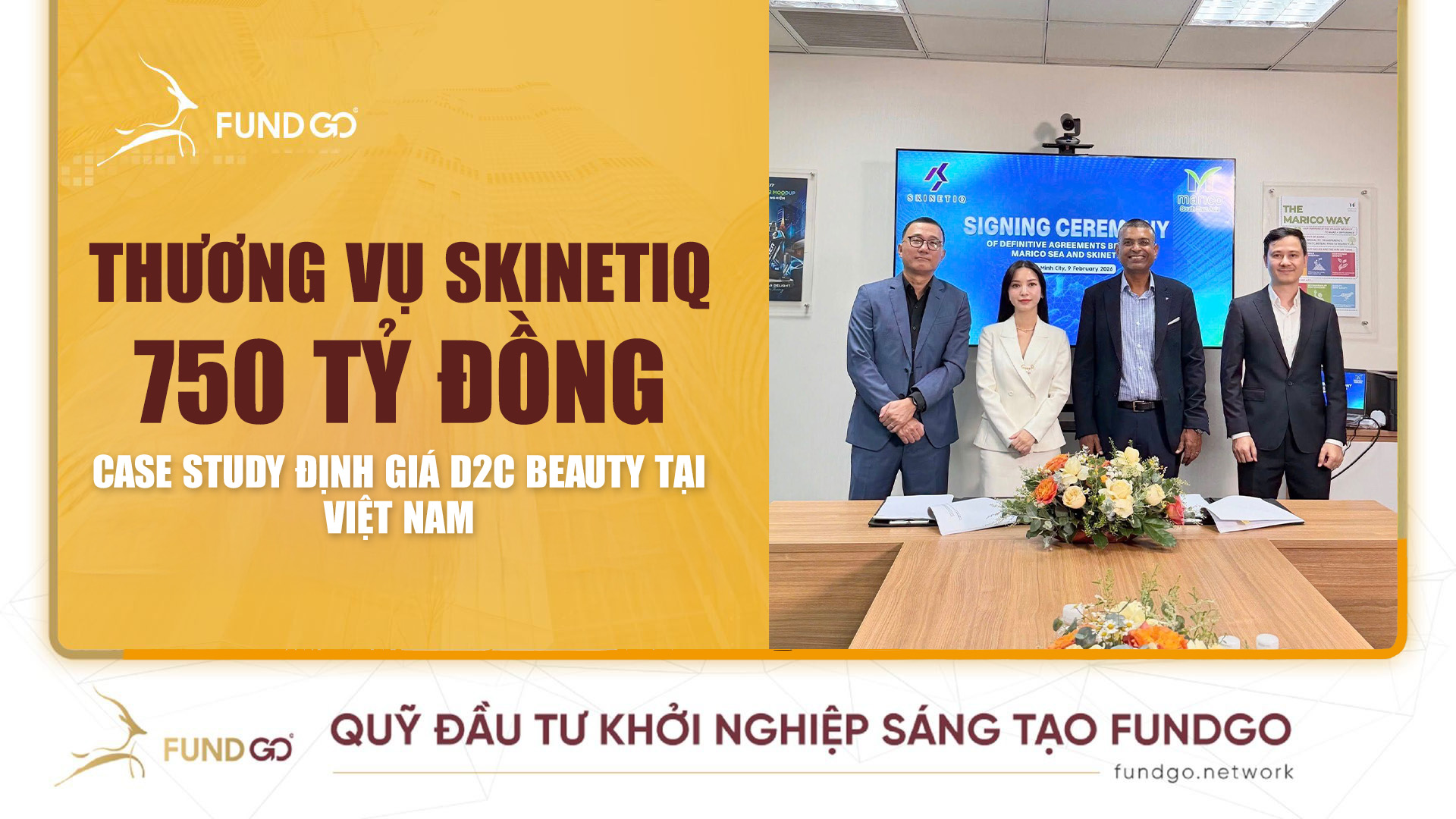
The Vietnamese M&A market has just seen another deal significant enough to prompt investors and D2C founders to pause and analyze: Indian conglomerate Marico Limited spent approximately VND 750 billion to acquire 75% shares of Skinetiq, a company co-founded by Hannah Nguyen. If we deduce this, then […]
The collapse of JWR shows that not all platforms claiming to be "gold investments" are based on the same value foundation. When comparing JWR and HanaGold within the same frame of reference, the differences become clear, stemming from the nature of the product, the risk management mechanism, and so on.
The recent collapse of the JWR gold investment app in China has become one of the biggest shockwaves for the region's financial markets. With estimated losses exceeding 10 billion yuan, equivalent to approximately $1.4 billion, […]
In recent years, Real World Assets (RWA) has been seen as a new approach to applying technology to asset management, cash flow transparency, and optimizing capital connectivity. Globally, many independent studies have noted the growth rate […]
In the digital transformation of the financial and business markets, many organizations worldwide are seeking models that make physical assets transparent, easy to track, and convenient for governance and capital management. Among them, RWA (Real World Assets) stands out...
In the period 2024–2035, digitizing data related to assets, benefits and cash flows in a verifiable, automated and risk-controlled way is considered the direction many organizations in the world are researching. However, not all models “bring data […]
In the global capital market structure, the typical recurring cash flow asset group, bonds, is often considered the stable foundation of many portfolios. In Vietnam, after a period of rapid growth and then strong adjustment, the need for “transparency – standardization – number […]
Creative innovation is entering an era where the core value lies not only in the original work, but also in the exploitation rights that can be extended over time and space. From music, movies, fictional characters to images, designs, content […]